
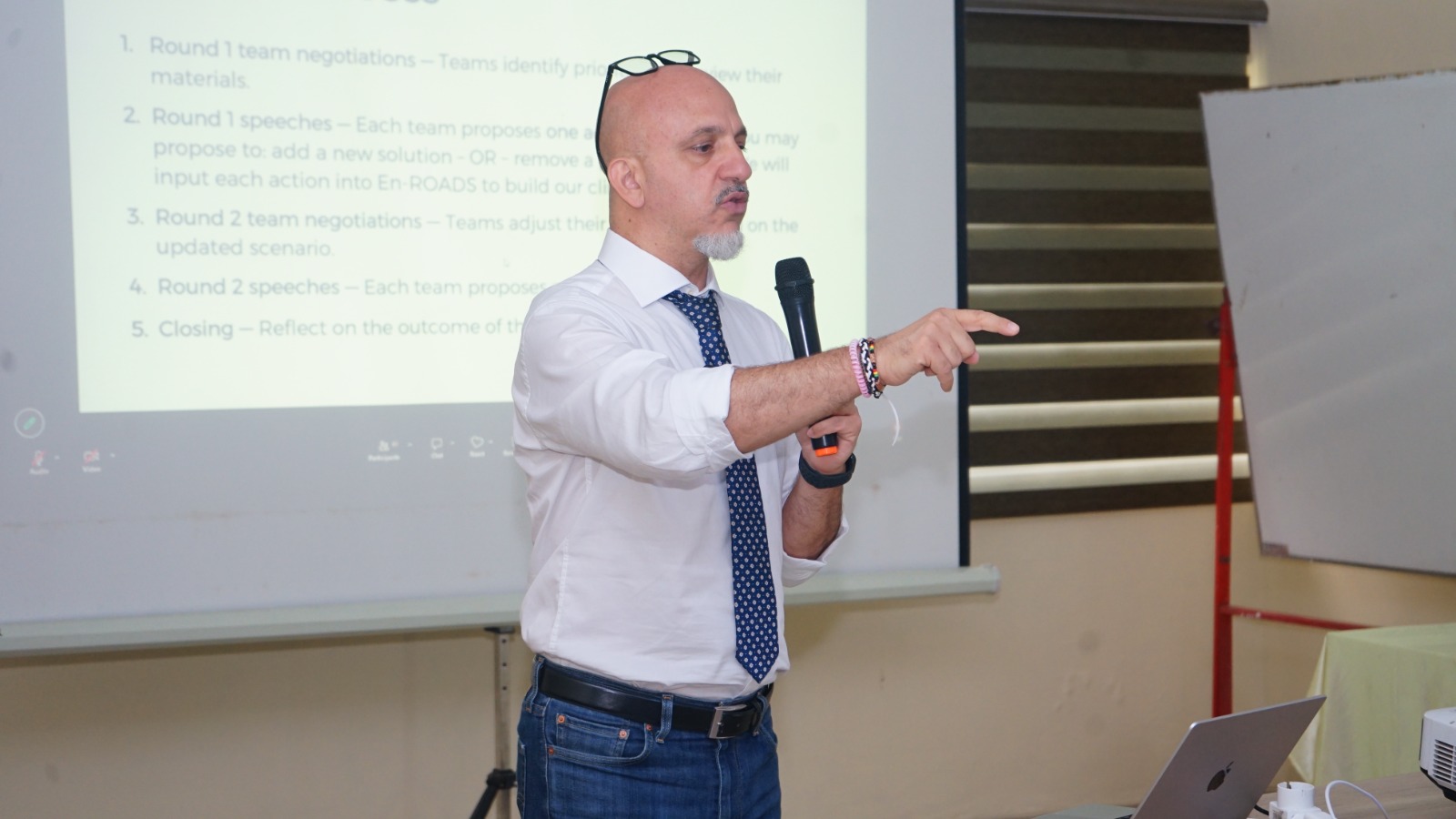
Prof. Armenia introducing the simulation rules
On 3rd September 2026, System Dynamics Italian Chapter (SYDIC) held a session titled “Climate Action Simulation with EnROADS” at the HQ premises of the National Centre for Technology Management (NACETEM) in the context of the 2nd biannual meeting of OWSD “Systems Thinking and Innovation: Transforming Challenges into Opportunities for National Development”.
The session, facilitated by Prof. Stefano Armenia, combined an introduction to climate change and its impacts with a Role-Playing session simulating a Conference of Parties meeting at the UN level. Participants went beyond discussing climate change mitigation solutions, by using the EnROADS simulator to test policy choices and observe how the model responded.
Climate Change as a double-layer complex system
During his presentation, Prof. Armenia introduced participants to the complexity of climate change and the negotiations around it, as well as the importance of looking at the issue as part of a wider system. Decisions about energy, agriculture, industry, transport, technology and land use are closely linked, and a change in one area alters the conditions in the others. For this reason, the overall effect of a measure cannot be judged by examining each sector separately.
This provided the basis for the practical part of the session: the introduction of En-ROADS, an interactive climate simulator developed by Climate Interactive and the MIT Sloan Sustainability Initiative. EnROADS is built on System Dynamics and allows users to adjust a range of policy and technology options and see how each one affects projected global emissions and temperature rise. Participants could adjust different options in the simulator and immediately see how the model responded.
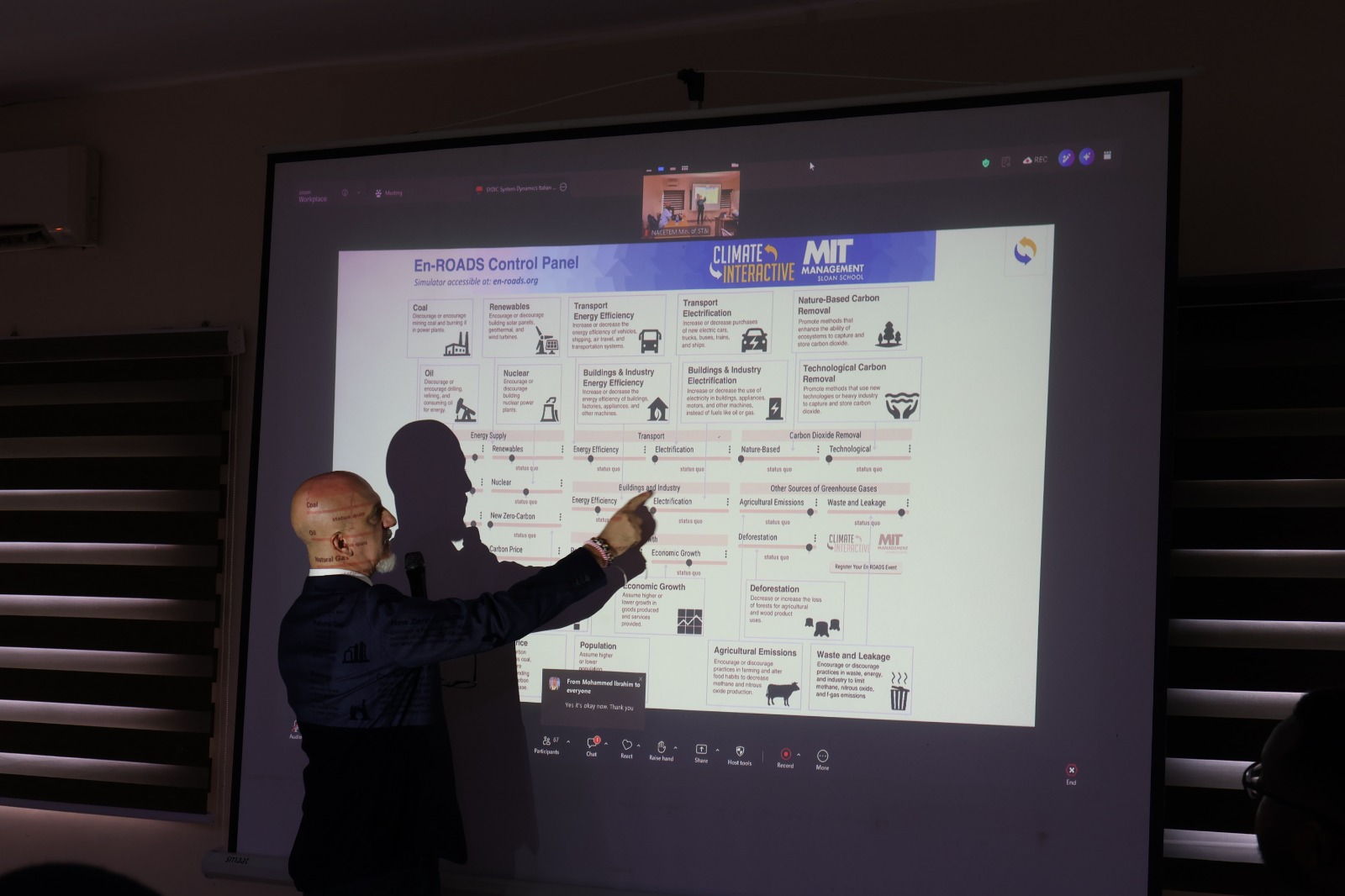
Prof. Armenia presenting the various levers available in the control panel of the En-ROADS simulator.
The interactive core of the session challenged participants, through a role playing session simulating a COP meeting, to apply these concepts directly. Prof. Armenia divided the audience into eight interest groups, each assigned to represent a critical sector or stakeholder group including Clean Technology, Agriculture & Food Systems, Oil & Gas, and Climate Policy Advocacy, among others. The panels were then asked to approach the climate challenge from the perspective they had been assigned, ach panel was given 20 minutes to negotiate key policy levers, identify high-impact interventions, and prepare a concise strategic proposal to present to the room. The small-group discussions forced participants to weigh competing economic priorities against long-term sustainability goals.
This exercise illuminated a fundamental tenet of Systems Thinking: diverse stakeholders can evaluate the very same problem in radically different ways depending on their underlying assumptions and institutional priorities (mental models).
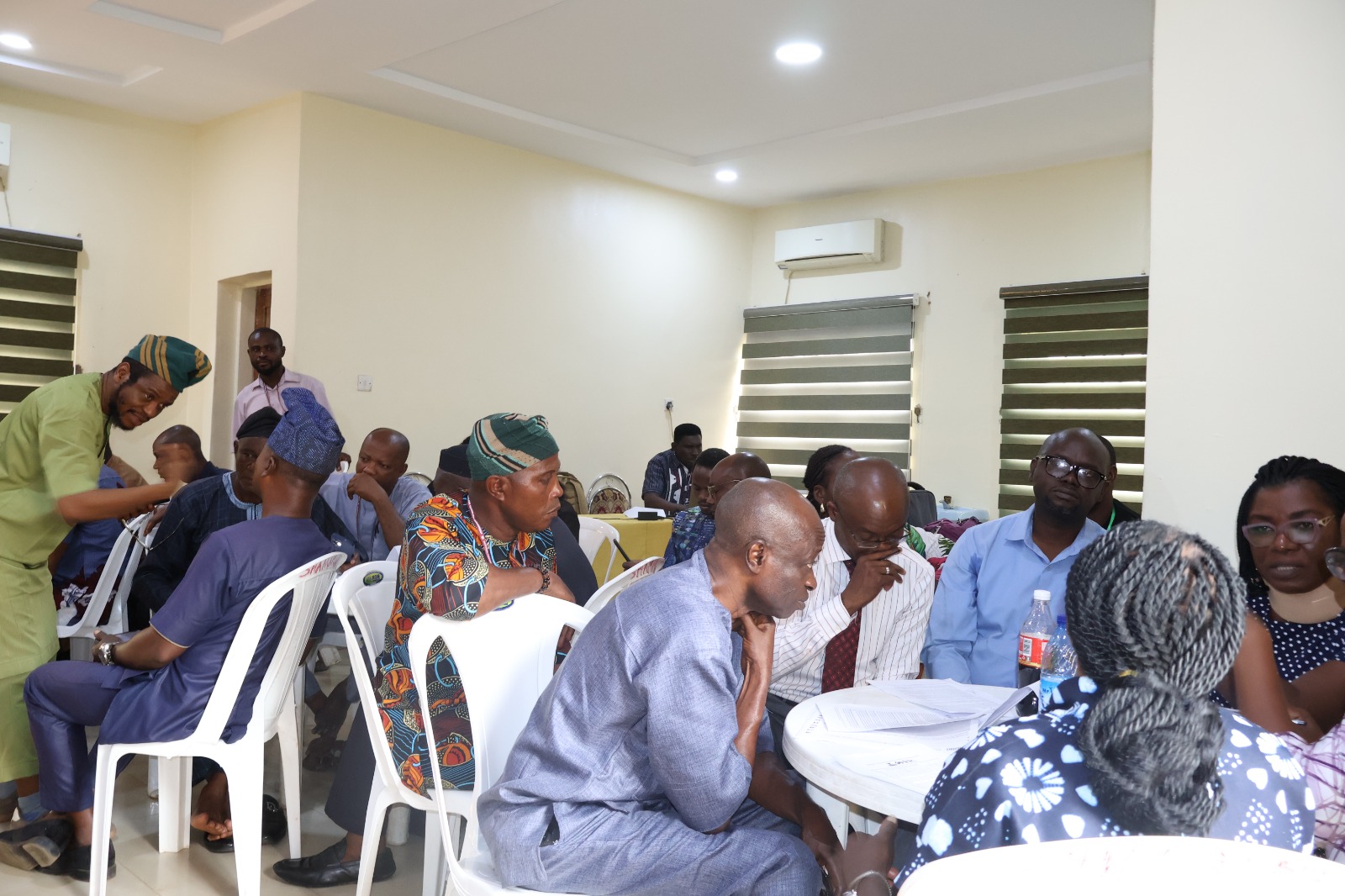
Group discussions in various panels.
Using the En-ROADS simulator, the various groups explored different policy and technology choices and observed their effects on the projected climate outcome. The simulator responded immediately to every change. A measure that appeared decisive when considered alone could have a very different effect once other interventions were applied alongside it. For instance, when the Clean Technology panel aggressively boosted renewable energy subsidies, the immediate drop in projected emissions was significant yet the simulator revealed that without other parallel policies (i.e. Carbon Taxes), long-term global warming targets remained out of reach.
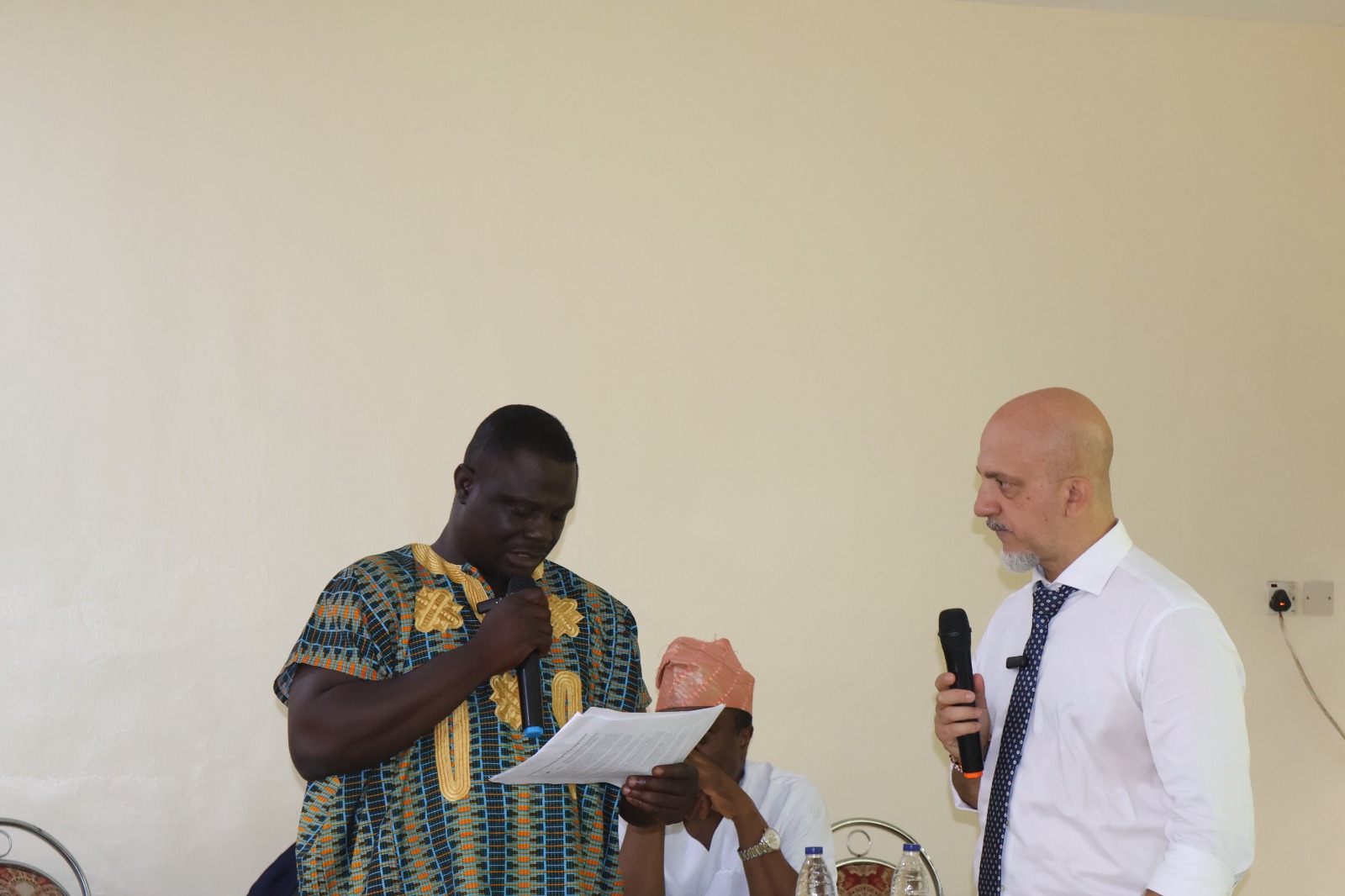
Participants tested different policy options and observed their potential impacts through the En-ROADS simulator.
The groups shared their approaches and results with the rest of the audience, thus opening a broader discussion on the different ways of responding to climate change issues. The exercise made clear that achieving global climate goals demands cross-sectoral alignment, shared accountability, and a clear understanding of complex system dynamics and systemic feedback structures. For the participants, En-ROADS offered a way to experience these interactions directly instead of simply reading about them.
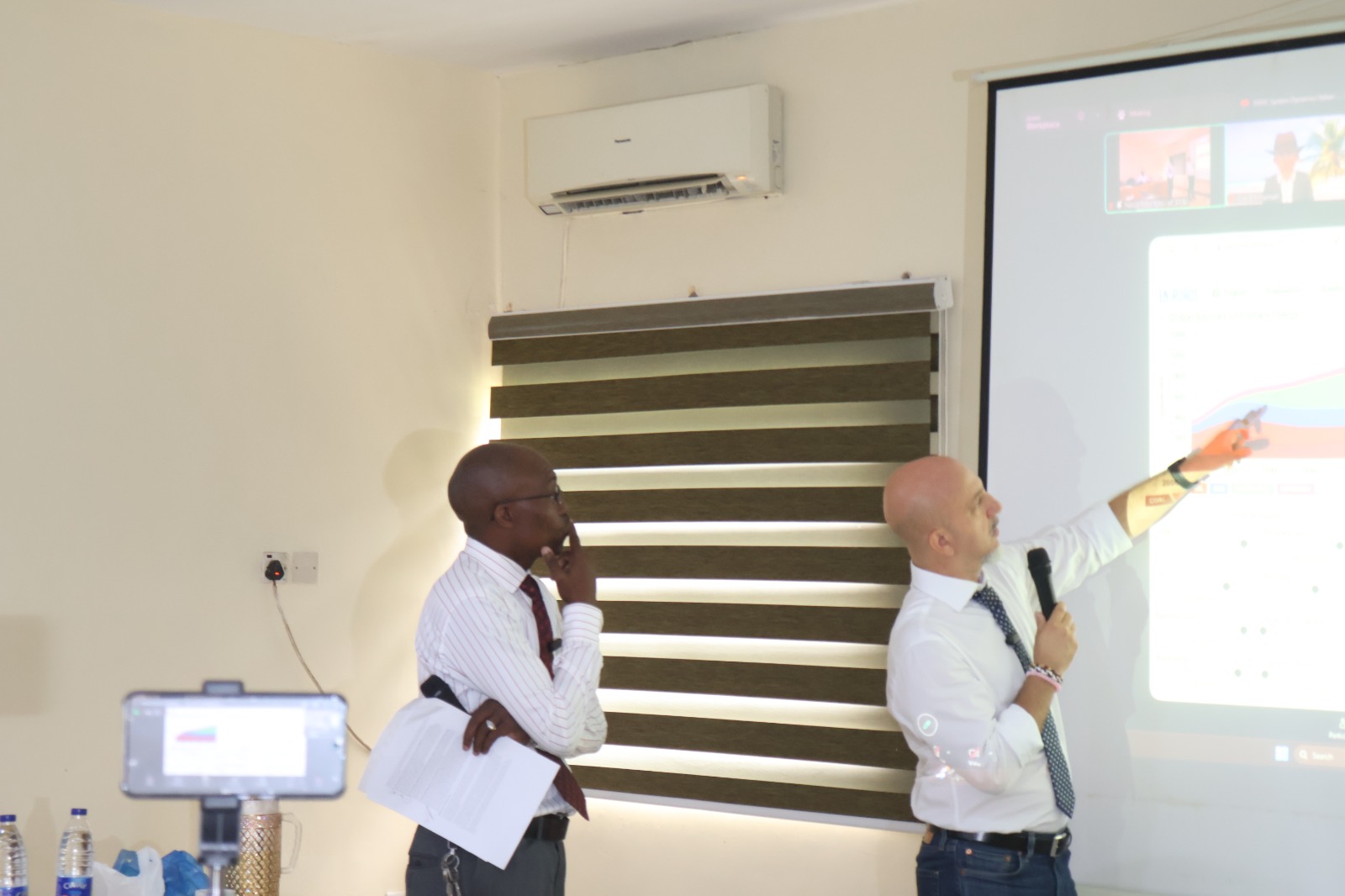
One of the panel leaders discussing their proposed policy and testing its impacts in the En-ROADS simulator.
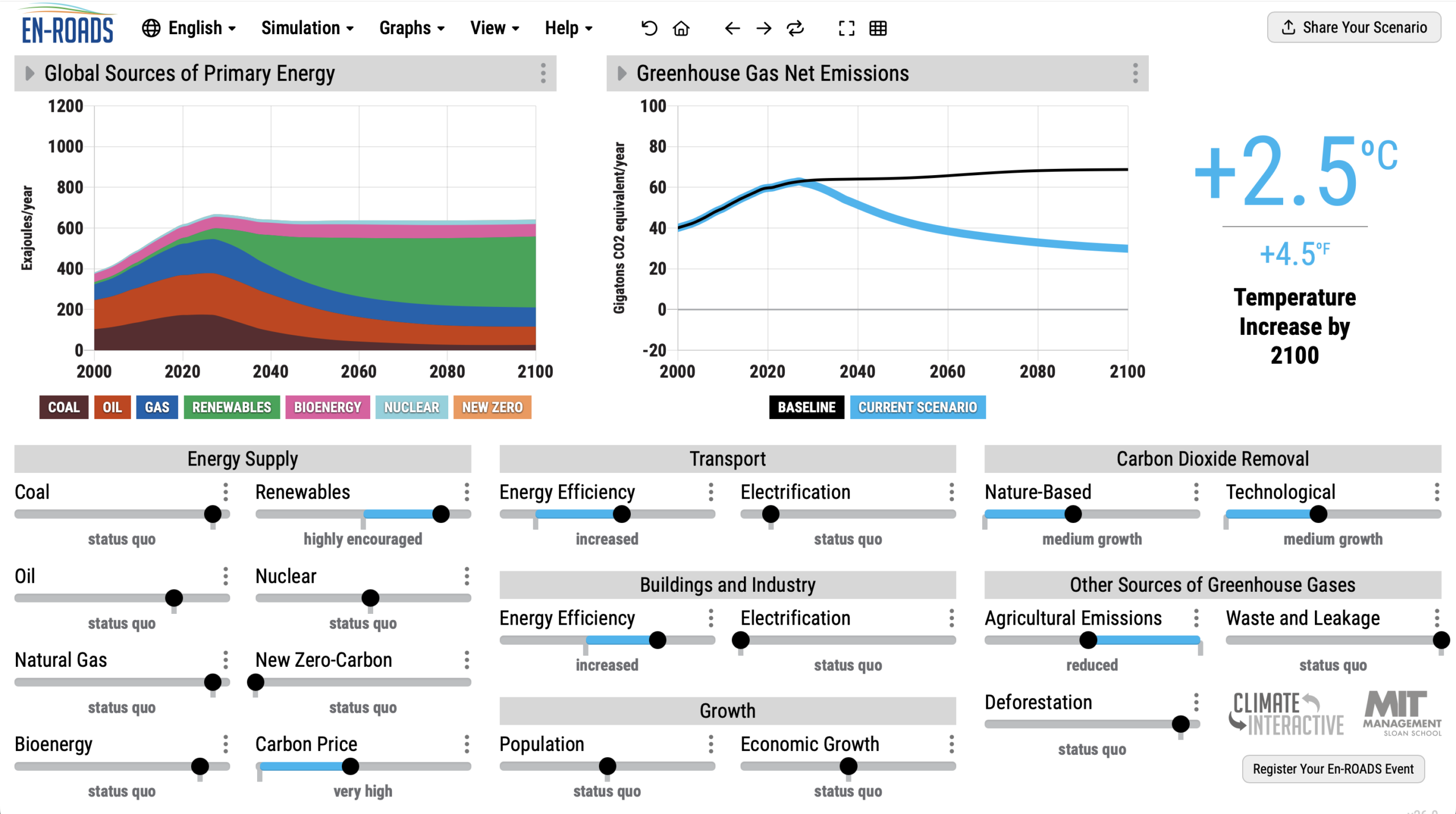
The control panel of the En-ROADS simulator
It is also worth mentioning that the EnROADS workshop at NACETEM directly reflected the core philosophy of the SYNAPSE project: leveraging Systems Thinking and System Dynamics to address complex global challenges and build cross-disciplinary collaboration. In fact, by exploring climate issues through an interactive simulation, participants were empowered to challenge their rigid mental models, test non-linear or even counter-intuitive assumptions, and appreciate the systemic consequences of strategic policy decisions
Ultimately, the session seamlessly integrated presentation, peer discussion, and empirical work, hence demonstrating how Systems Thinking tools can turn complex issues into actionable insights.